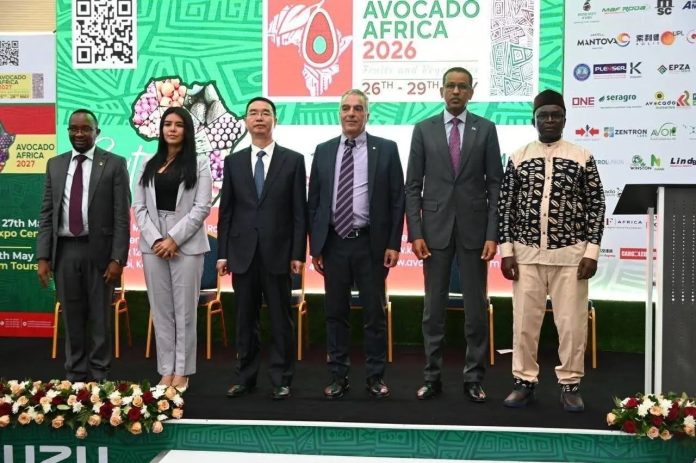
Diplomatic Row Over Nairobi Meeting
Nairobi, Kenya — A major diplomatic controversy has erupted involving Somalia’s embassy in Kenya, after the country’s ambassador attended a meeting organised by the Israeli embassy — an event that has sparked sharp criticism and raised serious questions about Somalia’s declared stance on Israel.
Ambassador Jibril Abdull participated in the so-called “Avocado Conference” — a gathering hosted by the Israeli diplomatic mission in Nairobi — despite Somalia having no formal diplomatic relations with the Israeli state. The attendance, first reported by regional media outlets, has quickly escalated into a full-blown political scandal in Mogadishu.
Tensions Over Somaliland Recognition
The timing of the controversy is particularly sensitive. Earlier this year, Israel formally recognised Somaliland as an independent entity, a move that sent shockwaves through Somalia’s federal government and was widely condemned as a violation of its territorial integrity. In response, Somalia severed what few potential diplomatic channels existed with Israel, and publicly reaffirmed its commitment to a unified Somali state.
The recognition by Israel of Somaliland — a breakaway region in the north of Somalia that has operated as a de facto independent state since 1991 — has been one of the most contentious diplomatic developments in the Horn of Africa this year. The Somali federal government insists Somaliland remains an integral part of its territory, and any foreign recognition of the region is viewed as an act of hostility.
“This participation is deeply troubling. It raises fundamental questions about whether Somalia’s stated policy of non-engagement with Israel is being respected at the highest levels of our diplomatic corps.” — Senior Somali Foreign Ministry official
President Allegedly Authorised Attendance
Sources close to Somalia’s Ministry of Foreign Affairs have told reporters that President Hassan Sheikh Mohamud was aware of Ambassador Jibril Abdull’s participation in the Israeli-hosted event and reportedly authorised it. According to these sources, the President gave what amounted to a green light for Abdull to attend, a revelation that has intensified scrutiny of the federal government’s actual position on Israel.
The claim, if verified, contradicts the Somali government’s public statements following Israel’s recognition of Somaliland. In March, the Somali Foreign Ministry issued a strongly-worded condemnation of Israel’s move, calling it “a flagrant violation of international law and Somalia’s sovereignty” and stating that all diplomatic engagement with Israel had been suspended pending further review.
Kenya’s Diplomatic Position Under Scrutiny
The event took place in Nairobi, Kenya’s capital, where multiple diplomatic missions maintain a significant presence. Kenya itself does not have normalised relations with Israel in the same way some other African nations do, though bilateral trade and security cooperation exist beneath the formal diplomatic surface. The choice of Kenya as the venue for the so-called Avocado Conference has added a layer of complexity, given Kenya’s own delicate balancing act between Western partners and regional political sensitivities.
The conference, whose exact purpose remains unclear beyond its publicly stated agricultural theme, brought together diplomats and officials from several East African nations. It is not known whether other African ambassadors attended the same event, but reports suggest the Somali ambassador’s presence was particularly noted by observers from other delegations.
Regional Foreign Policy Implications
The development is likely to fuel renewed debate over Somalia’s foreign policy approach in the Horn of Africa and the broader Middle East. Somalia has historically aligned itself with the Arab and Islamic world, and formal recognition of Israel remains deeply unpopular among the Somali public and political establishment alike. Any perception that the government is secretly maintaining channels with Israel — despite public commitments to the contrary — risks severely damaging the administration’s credibility at home.
The scandal also comes at a fragile moment for Somalia’s federal system. The government in Mogadishu is still working to consolidate control over territory previously held by Al-Shabaab militants, and relies heavily on international support — both from Western powers and regional allies — for its security and stabilisation efforts. A diplomatic controversy of this nature has the potential to complicate those relationships.
“Somalia cannot afford this kind of controversy right now. We are in the middle of a long struggle against extremism, and we need every friend we can get. If our own ambassadors are attending Israeli events while we publicly condemn Israeli actions, it sends a deeply contradictory message.” — Political analyst in Mogadishu
Government Responds to Criticism
As of publication, the Somali government had not issued a formal response to the controversy surrounding Ambassador Abdull’s attendance. The Ministry of Foreign Affairs has declined to comment on whether the participation was pre-authorised or whether any formal review of the ambassador’s actions is underway.
Ambassador Jibril Abdull himself has not publicly addressed the scandal. His social media accounts, which had previously been active in promoting Somalia-Kenya bilateral relations, have been silent since the story broke.