
Teleskoobka Hubble-ka ee NASA wuxuu ka sheegay inuu arko wadnaha 10-ta dhinac ee dhinaca koonfureed ee Saataarn
NASA ayaa sheegtay in teleskoobka Hubble-ka uu ka sheegay inuu arko wadnaha 10-ta dhinac ee dhinaca koonfureed ee Saataarn, taas oo ah markii ugu horreysay ee la arko nooc ka tirsan wadnaha dhexe ee dhinaca koonfureed.
Furitaanka wadnaha cusub
NASA ayaa sheegtay in teleskoobka Hubble-ka uu ka sheegay inuu arko wadnaha 10-ta dhinac ee dhinaca koonfureed ee Saataarn, taas oo ah markii ugu horreysay ee la arko nooc ka tirsan wadnaha dhexe ee dhinaca koonfureed.
Tani waxay ahayd markii ugu horreysay ee la arko nooc ka tirsan wadnaha dhexe ee dhinaca koonfureed, taas oo ah markii ugu horreysay ee la arko nooc ka tirsan wadnaha dhexe ee dhinaca koonfureed.
Xaqiiqooyinka iyo qoraalada
Qoraalka ayaa lagu daabacay wargeyska Science Advances, kaas oo ah wargeyska ugu weyn ee qoraalada, kaas oo ah wargeyska ugu weyn ee qoraalada.
Qoraalka ayaa lagu daabacay wargeyska Science Advances, kaas oo ah wargeyska ugu weyn ee qoraalada, kaas oo ah wargeyska ugu weyn ee qoraalada.
Furitaanka wadnaha cusub
NASA ayaa sheegtay in teleskoobka Hubble-ka uu ka sheegay inuu arko wadnaha 10-ta dhinac ee dhinaca koonfureed ee Saataarn, taas oo ah markii ugu horreysay ee la arko nooc ka tirsan wadnaha dhexe ee dhinaca koonfureed.
Tani waxay ahayd markii ugu horreysay ee la arko nooc ka tirsan wadnaha dhexe ee dhinaca koonfureed, taas oo ah markii ugu horreysay ee la arko nooc ka tirsan wadnaha dhexe ee dhinaca koonfureed.
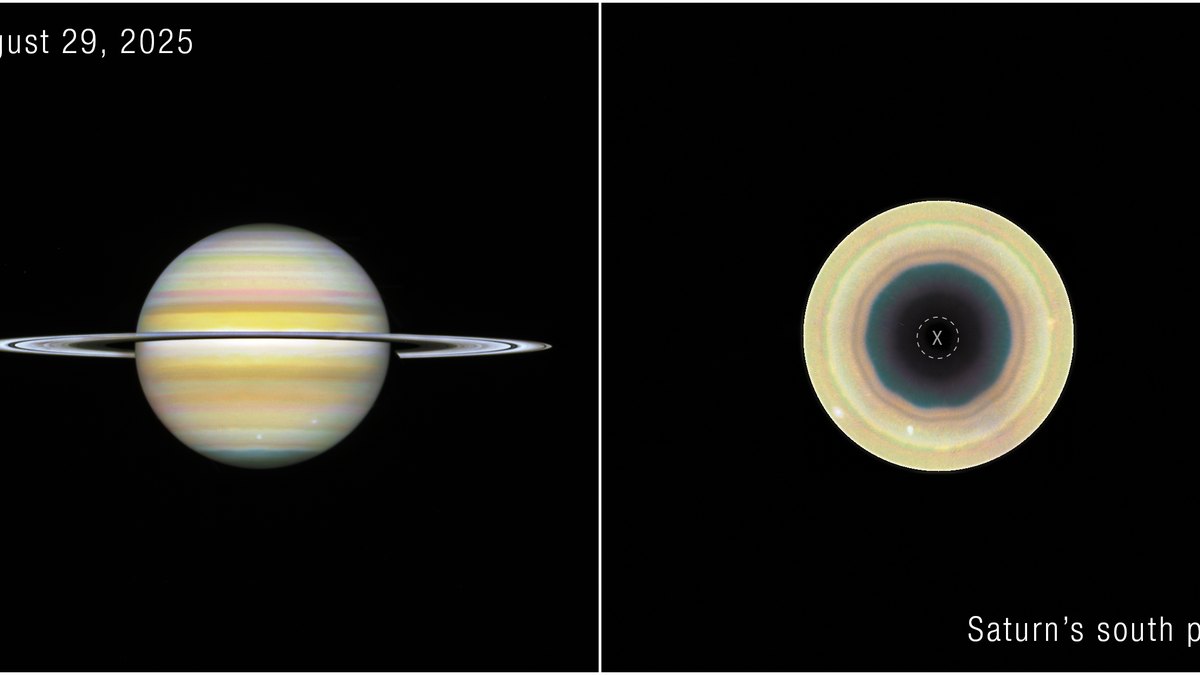
NASA's Hubble Space Telescope has captured the first large, regular-sided jet pattern in Saturn's southern hemisphere: a giant, evolving 10-sided atmospheric wave encircling the planet's south pole, published Wednesday in Science Advances.
A Rare Atmospheric Discovery
The feature appears remarkably similar to Saturn's famous hexagon at its northern pole, but is also distinctly different, suggesting scientists may be witnessing a new atmospheric phenomenon develop on the iconic gas giant.
Researchers pieced together several years of Hubble observations dating back to 2023, finding subtle hints of the structure beginning to emerge before it became a clearly defined pattern.
Ground Observers and Space Data Converge
Agustín Sánchez-Lavega and amateur astronomers Trevor Barry and Jean-Paul Oger noticed a subtle undulating band along the southern pole in images first in 2024, with additional 2025 imagery hinting even more strongly toward this decagon structure.
Hubble's view from space offers unmatched image sharpness and spatial resolution over full rotations of Saturn, without smearing by Earth's atmosphere, confirming the feature's presence back to 2023.
Looking Ahead to Further Study
The wave sits within one of Saturn's powerful jet streams and extends through multiple layers of the atmosphere, indicating it is not just a cloud-level feature, but a vertically extended atmospheric structure.
The authors say further study is needed from Hubble and NASA's James Webb Space Telescope, as well as analysis of computer models, to understand how the decagon formed, how long it may last, and how it compares to the long-lived hexagon in the north.
Ilaha iyo xuquuqda sawirka
Sawir: NASA News Releases Xigasho