
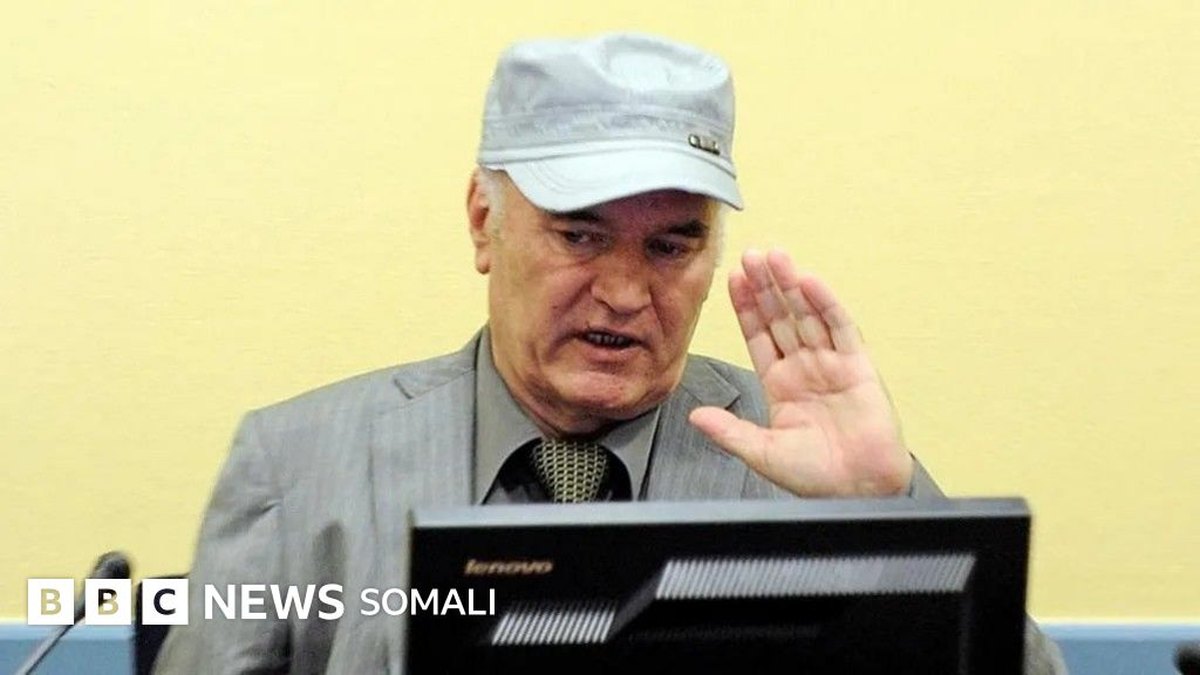
Ratko Mladić, taliyihii ciidamada Serbiyiinta Bosnia, oo ku geeriyooday xabsiga Hague
Ratko Mladić oo 84 jir ah ayaa ku dhintay xabsi ku yaal The Hague isagoo helay daryeel caafimaad. Wuxuu ahaa taliye ciidamada Serbiyiinta Bosnia, waxaana lagu xukumay 2017 xasuuq iyo dambiyo dagaal intii lagu jiray 1992-95.
Xukunka iyo Noloshiisa Xabsiga
Ka dib dagaalkii Bosnia, Mladić wuxuu baxsad ahaa 16 sano ilaa laga helay miyiga Serbia 2011. Tan iyo markaas wuxuu ku xirnaa xarunta Hague, isagoo aan waligiis aqoonsan maxkamadda ICTY. 2021 ayuu racfaan qaatay xukunkiisa.
Bishii Maajo, maxkamaddu way diiday codsi loo sii daayo xabsiga maadaama uu marxaladda ugu dambaysay ee noloshiisa ku jiray. Garsooruhu wuxuu xaqiijiyay xaaladdiisu 'xun tahay' laakiin go'aamiyay 'daawayn dhammaystiran oo naxariis leh'
Falalkii Dagaalka ee Bosnia
Ciidamadiisii waxay geysteen 'isirtir qowmiyadeed' gudaha Bosnia-Herzegovina iyagoo barakicinayay dadka aan Serbiyiinta ahayn. Waxay go'doomiyeen Sarajevo oo ku dhinteen 10,000 qof, waxayna xasuuqeen 8,000 rag iyo wiilal oo Srebrenica joogay.
Mladić wuxuu hoggaaminayay ciidamada Serbiyiinta isagoo dagaalamayay Croat-ka iyo Bosniak-ka intii lagu jiray sagaashameeyadii. Dambiihiisa waxaa qeexay maxkamadda ICTY ee la xukumay 2017 kaddib dacwadihii dagaalladii Yugoslavia.
Falcelinta Geerida
Hasan Hasanović, badbaadiyay Srebrenica, wuxuu yiri: 'Geeridiisu waa uun arrin dabiici ah oo dhanka noolaha ah, mana soo afjareyso qorshihii siyaasadeed iyo kii milateri ee sababay dhaxalkaas xasuuqa ah. Hadda waxaan la noolnahay cawaaqibka ka dhashay waddan kala qaybsan iyo diidmada in la qirto xasuuqa.'
Milorad Dodik wuxuu Reuters u sheegay Mladić 'wuxuu ixtiraami jiray dadka Serbian-ka ah' isagoo difaacay. Reer Belgrade qaar ayaa ammaanay; Milan wuxuu yiri 'waxaan aaminsanahay inuu difaacay', Vasilije wuxuu u arkay 'cadaalad-darro' maxkamadeyntiisa.
Ratko Mladić, the Serbian general convicted of genocide and war crimes during the Yugoslav wars, has died in a prison hospital in The Hague at the age of 84. The International Criminal Tribunal for the former Yugoslavia confirmed his death on Thursday and said Dutch authorities have launched an investigation into the circumstances surrounding his passing.
A Life of Controversy and Conviction
Mladić was at large for 16 years after the Bosnian war until he was captured in rural Serbia in 2011. He was subsequently convicted in 2017 for war crimes, crimes against humanity, and genocide committed during the Yugoslav wars of 1992-95. He appealed his conviction at the ICTY in 2021 but remained in detention at the facility in The Hague since his capture.
In May, the ICTY rejected a request to release Mladić from prison because he was in the final stage of his life. The judge acknowledged Mladić's condition was 'bad' but decided he should receive 'complete and humane treatment' in prison. His lawyers stated that he had previously spent long periods lying on a bed or in a wheelchair and was nearly unable to speak due to a suspected tumor.
Crimes Against the Bosnian People
Mladić led the Serbian forces in Bosnia during the 1990s, fighting against Croatian and Bosniak (Muslim) forces. During the war, his forces committed 'ethnic cleansing' within Bosnia-Herzegovina, attempting to forcibly displace non-Serbian populations. His forces besieged Sarajevo, where more than 10,000 people died, and massacred 8,000 men and boys in Srebrenica.
Mladić never recognized the ICTY and has been held at the detention facility in The Hague since 2011. He was given medical care at the ICTY prison hospital, where he died. The ICTY confirmed his death on a Thursday and stated that Dutch authorities have begun an investigation.
Divided Reactions to His Death
Hasan Hasanović, a survivor of the Srebrenica massacre, told BBC World Service's Newshour that Mladić's death 'did not bring a feeling that the matter is over, because the people who were massacred in Srebrenica cannot come back'. He stated: 'His death is only a natural event on the living side, and it does not end the political and military plan that caused this massacre. Now we are living with the consequences of a divided country and the refusal to acknowledge the genocide.'
Milorad Dodik, the leader of the independent Serb entity in Bosnia, told Reuters that Mladić 'used to respect the Serbian people. As a commander, he stood up to defend the Serbian people.' Some residents of Belgrade, the capital of Serbia, also praised Mladić. A man named Milan said: 'I truly believe he defended the Serbian people, because ultimately, that was his duty.' Another man named Vasilije said: 'It is very sad and great, truly it is. For me, I think it is a great injustice that he was even sent to the Hague trial.'
Ilaha iyo xuquuqda sawirka
Sawir: BBC Somali Xigasho