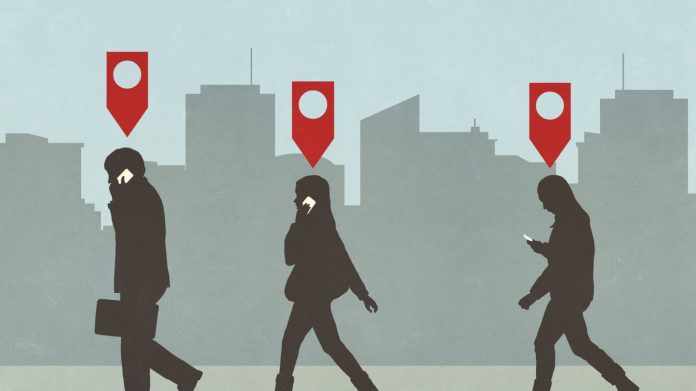
old kids on their smartphones. Is that healthy?
News
Most parents track their 18-25-year-old kids on their smartphones. Is that healthy?
Imagine it’s the 1980s or early ’90s, and there’s a queue for the pay phone in a college dorm hallway. Students line up, waiting their turn for the once-a-week, brief check-in with a parent. That was the norm, says Laurence Steinberg, a professor of psychology and neuroscience at Temple University.
“Parents and their adult children are much closer emotionally these days than they had been in past generations,” Steinberg says. The shift, from what he observes as a professor, is dramatic. “To the point where sometimes during midterms or finals, the students have to kind of block their parents from texting them because they’re interrupting them too much,” he says.
Details
More than half of parents of 18- to 25-year-olds say they track their adult children using smartphone apps, according to a new University of Michigan survey. And as technology becomes ever more present, and the boundaries between independence and reliance in late adolescence and early adulthood continue to evolve and shift, researchers say tracking can be both a way to stay in touch that is healthy and supportive, but may also cross the line to surveillance or too much interference.
Steinberg says he is not surprised by results of the new survey showing how many parents track their adult children. The tracking technology built into smartphones has become a part of society – both the adoption and expectation of more virtual connection.
Sarah Clark is co-director of the University of Michigan Health C.S. Mott Children’s Hospital National Poll on Children’s Health. She explains the first question put to the 1,542 parents surveyed was whether they tracked their adult child’s location using a cellphone.
Analysis
“I was just shocked, 52% do that. And when they do it, the majority of the time the location tracking is always on,” she says.
Want the latest stories on the science of healthy living? Subscribe to NPR’s Health newsletter.
Most parents cited peace of mind about their child’s safety as a main reason to track. But Clark says about 25% of parents who track their adult children said the ability to monitor their location may sometimes cause anxiety, more than reassurance. The poll found parental tracking is more common with 18-20 year olds, compared to adults in their twenties.
Stay informed with the latest news on Wararka.so — your trusted source for Somalia and world news.