[ad_1]
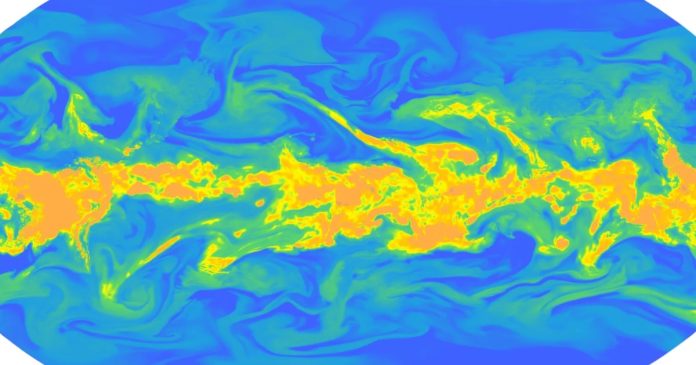
What’s happened? Google has introduced WeatherNext 2, its latest AI-powered weather forecasting model, designed to deliver faster, more accurate forecasts.
- WeatherNext 2 is developed by Google DeepMind and Google Research. It uses a new Functional Generative Network (FGN) architecture that can simulate hundreds of possible weather scenarios from a single input.
- The new architecture allows for richer, more reliable predictions. It is also available in Google Search, Gemini, and Pixel Weather.
- Developers and enterprises can access WeatherNext 2’s datasets in Earth Engine, BigQuery, and through early-access APIs in Vertex AI.
Weather affects everything and everyone. Our latest AI model developed with @GoogleResearch is helping us better predict it. ⛅
WeatherNext 2 is our most advanced system yet, able to generate more accurate and higher-resolution global forecasts. Here’s what it can do – and why… pic.twitter.com/yVdFFlAHpE
— Google DeepMind (@GoogleDeepMind) November 17, 2025
Why is this important? Weather affects everything from planning commutes, travelling, agriculture, energy grids, and emergency response. And hence, improving forecast accuracy and speed can benefit all fields.
- WeatherNext 2 forecasts up to eight times faster and shows measurable gains across 99.9% of tested variables, such as temperature, wind, and humidity.
- As extreme weather becomes more frequent, reliable short- and long-range predictions are increasingly critical for safety and preparedness.
- Integrating such a model into ubiquitous products like Search, Gemini, and Maps means more people will have access to better forecasts.
Why should I care? When you open Google Search or check the weather via a Google-enabled service provider, you’ll get more accurate, hour-by-hour forecasts, which can benefit your outdoor activities or travel plans.
- For travellers or people using apps with Google Maps integration, the weather layer will become more useful.
- The upcoming Maps integration means clearer weather-impacted routing, better storm tracking, and more useful travel and outdoor activity alerts.
- For power users or businesses, improved datasets allow better optimisation of deliveries, events, or outdoor operations.
OK, what’s next? Google has also confirmed that Google Maps will be the next major product to adopt WeatherNext 2, bringing more advanced weather layers, alerts, and real-time overlays to its popular navigation and travel tools.
- In the near future, the company may introduce personalized insights, like predictive rain windows for your commute or automated task suggestions based on forecast shifts.
- AI-first forecasting could reshape the global weather industry as Google and others move beyond traditional weather modelling.
[ad_2]