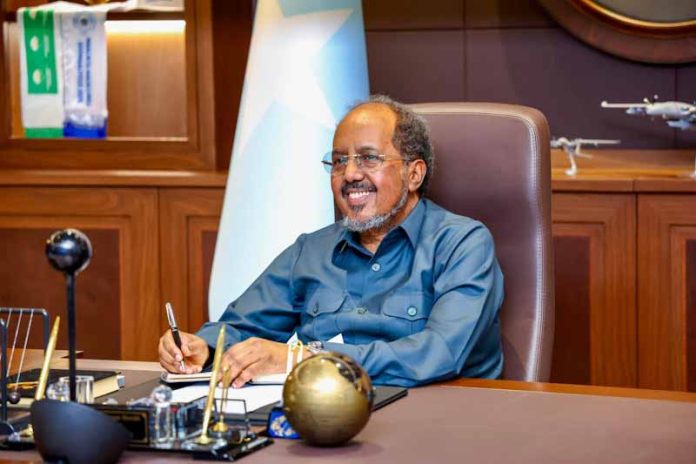
It was the kind of sentence that travels. Measured in delivery, incendiary in implication.
Wararka Soomaaliya
Standing before his nation on its independence anniversary this week, Somali President Hassan Sheikh Mohamud spoke not only of the Somalia that exists – a republic still rebuilding from more than three decades of civil war – but of the Somalia that, in the nationalist imagination, was never completed.
“The hope visible in Somalia today is not confined solely to the Republic of Somalia established through union in 1960,” he said. “It is also shared by the other three missing parts, which look upon it with the same hope and expectation.”
Those three missing parts, as widely understood in the context of Somali political history, are Ethiopia’s Somali Region, Kenya’s Northeastern Province and the Republic of Djibouti – territories that Somali nationalists have long regarded as severed limbs of a nation that colonial borders never allowed to be whole.
Faahfaahinta
The president did not elaborate on what he meant. He did not need to. The idea is old enough, and consequential enough, that the mere invocation of it carries its own weight.
The Five-Pointed Star: What It Was, and What It Promised
To understand why those words reverberate, it is necessary to go back to 1960 – and to the flag.
Saamaynta
When British Somaliland and Italian Somaliland merged on 1 July of that year to form the Somali Republic, the new nation adopted a light blue banner bearing a single white star with five points. Each point was not decorative. Each pointed, deliberately, toward a Somali-inhabited territory that nationalists believed belonged within a single sovereign state.
The five territories were: Italian Somaliland, which became the republic’s southern and central regions; British Somaliland, its northern half, now the self-declared Republic of Somaliland; French Somaliland, the small coastal territory that became the independent Republic of Djibouti in 1977; the Ogaden – known to Somali nationalists as Western Somalia – the vast arid expanse that remained inside Ethiopia and is today designated its Somali Region; and the Northern Frontier District, a predomina
Successive Somali governments did not merely carry this vision symbolically. They pursued it. Through diplomatic pressure. Through support for cross-border insurgencies. And, ultimately, through war.
Wararka.so waxay kuu soo tebineysaa wararka ugu dambeeyey ee Soomaaliya iyo caalamka. Si aad ula socoto wararkii ugu dambeeyey, booqo boggayaga.