

Museveni says Uganda’s Somalia mission was solidarity with Ethiopia, not Somalia
MOGADISHU (Somaliguardian) – President Yoweri Museveni has said Uganda’s nearly two-decade military deployment in Somalia was driven primarily by solidarity with Ethiopia – whose forces invaded Somalia in 2006 to remove the Islamic Courts Union from power in Mogadishu – rather than by any direct stake in Somalia’s own stability.
Wararka Soomaaliya
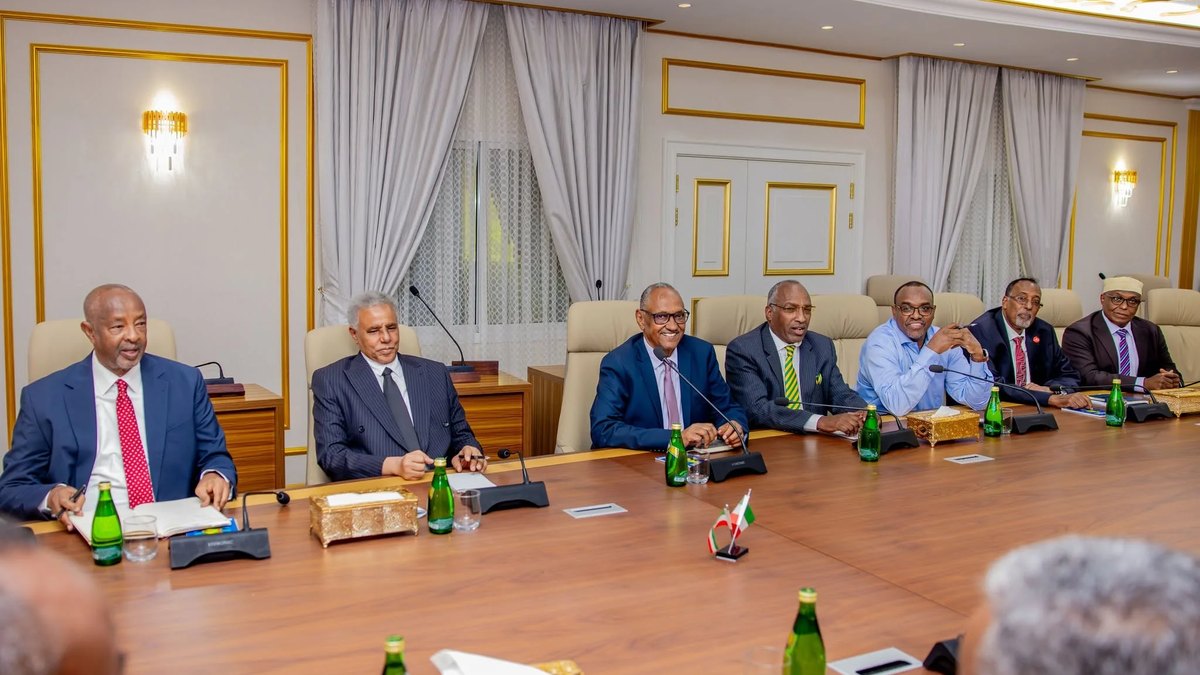
Museveni made the remarks last month at the Second Extraordinary Summit of Heads of State of Troop-Contributing Countries to the African Union Support and Stabilisation Mission in Somalia (AUSSOM), held at Speke Resort Munyonyo in Kampala.
“Uganda does not have a border with Somalia. When, therefore, we decided to involve ourselves in Somalia it was out of principle and strategy,” Museveni told the summit. He cited opposition to what he called “Islamic chauvinism” spreading from Somalia and Sudan as a first reason, and solidarity with Ethiopia as a second, explaining that Addis Ababa had faced attacks linked to the countries.
Uganda became the first country to deploy troops to Somalia in 2007, under what was then the African Union Mission in Somalia (AMISOM), the predecessor to AUSSOM.
Faahfaahinta
The remarks came as the summit’s participants – Uganda, Ethiopia, Kenya, Djibouti, Egypt and Burundi – confronted a funding crisis threatening the mission’s survival. The United Nations Support Office in Somalia (UNSOS), which supplies logistics for AU peacekeepers, is set to end its mandate on December 31, 2026, after the United States informed the African Union on July 1 that it would not support renewal of the mission’s mandate at the UN Security Council.
Uganda’s Chief of Defence Forces, Gen. Muhoozi Kainerugaba, told the summit’s military chiefs’ session that “these are difficult circumstances, but they also call for our unity, creativity, and resolve,” and urged urgent preparation for an African-led alternative to UNSOS support.
African Union Commission Chairperson Mahmoud Ali Youssouf said the AU remained committed to mobilising the political, diplomatic and financial resources needed to sustain the mission. Somali President Hassan Sheikh Mohamud thanked Museveni for convening the summit and described Uganda as “one of Somalia’s strongest pillars.”
Saamaynta
The summit was not without friction. Analyst Rashid Abdi of Nairobi-based Sahan Research said Mohamud pressed successfully to have language on dialogue with Somali opposition figures softened in the summit’s final communique, calling it evidence Mohamud “knows how to get what he wants” through pressure tactics — a separate dispute that surfaced during the same three-day gathering.
Museveni’s solidarity remarks have circulated widely on Somali social media, where they have drawn criticism from users who describe Ethiopia’s 2006–2009 presence in Somalia as an occupation, rather than a stabilisation effort, responsible for thousands of civilian deaths and widespread destruction of property and numerous human rights abuses. Current Somali federal officials have previously used similar language to describe that period.
Neither Somalia’s federal government nor the African Union Commission has issued a formal response addressing Museveni’s solidarity framing specifically.
Wararka.so waxay kuu soo tebineysaa wararka ugu dambeeyey ee Soomaaliya iyo caalamka. Si aad ula socoto wararkii ugu dambeeyey, booqo boggayaga.