– Weill Cornell Medicine
News
– Tiny silica nanoparticles engineered to seek out prostate cancer caused tumor cells to self-destruct and supercharged the immune system in preclinical mouse studies. Combined with immunotherapy, the treatment produced complete remissions in multiple mice, raising hopes for a powerful new approach to prostate cancer.
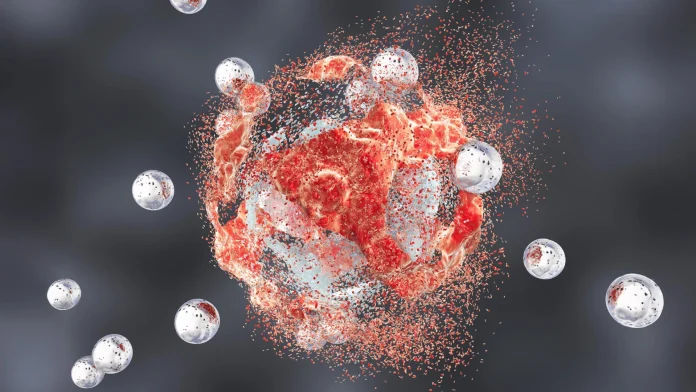
Researchers have developed tiny silica nanoparticles that can directly destroy prostate tumors while also awakening the body’s immune system to fight cancer, according to a new preclinical study led by scientists at Weill Cornell Medicine and the Cornell Duffield College of Engineering. In mouse models of aggressive prostate cancer, the targeted particles produced several complete tumor remissions, offering encouraging evidence that the approach could eventually advance to human clinical trials.
Made from amorphous silica, a form of silicon dioxide found naturally in foods and the fossilized remains of microscopic organisms, the engineered nanoparticles appear to attack prostate cancer in multiple ways at once.
Details
Tiny nanoparticles with a dual cancer fighting strategy
The nanoparticles, known as ultrasmall fluorescent core shell silica nanoparticles or Cornell Prime dots (C’ dots), were originally created to improve medical imaging. They have already advanced into late stage clinical trials for image guided surgery and other therapeutic uses.
More recently, researchers discovered that the particles themselves can selectively damage cancer cells while leaving healthy cells largely unharmed.
Analysis
In the new study, published June 15 in Cancer Research, a journal of the American Association for Cancer Research, the team tested the nanoparticles in mice with aggressive prostate cancer. They found that the particles made tumor cells highly vulnerable to a form of self destruction while also transforming the tumor environment from an immune resistant “cold” state into an immune active “hot” state. This shift could significantly improve the effectiveness of existing immunotherapies.
“We’re very encouraged by these results; a treatment that directly induces tumor-cell death while transforming the immune microenvironment, as this does, would represent a new clinical paradigm,” said senior author Dr. Michelle Bradbury, the Endowed Professor of Imaging Research in Radiology and director of the Molecular Imaging Innovations Institute at Weill Cornell Medicine and a neuroradiologist at NewYork-Presbyterian/Weill Cornell Medical Center.
The work is part of a long running collaboration between Dr. Bradbury’s laboratory and the laboratory of co corresponding author Dr. Ulrich Wiesner, the Spencer T. Olin Professor in the Department of Materials Science and Engineering and a professor in the Department of Design Tech in the College of Architecture, Art, and Planning. The research received support in part from the Parker Institute for Cancer Immunotherapy at Weill Cornell Medicine.
Stay informed with the latest news on Wararka.so — your trusted source for Somalia and world news.