Welcome back to TechCrunch Mobility, your hub for the future of transportation and now, more than ever, the role AI is playing in it. To get this in your inbox, sign up here for free — just click TechCrunch Mobility!
News
TechCrunch covered a couple of stories this week that illustrate the countervailing forces at play within the autonomous vehicle industry. The federal government is hitting the accelerator while state and local officials are pumping the brakes on autonomous vehicles.
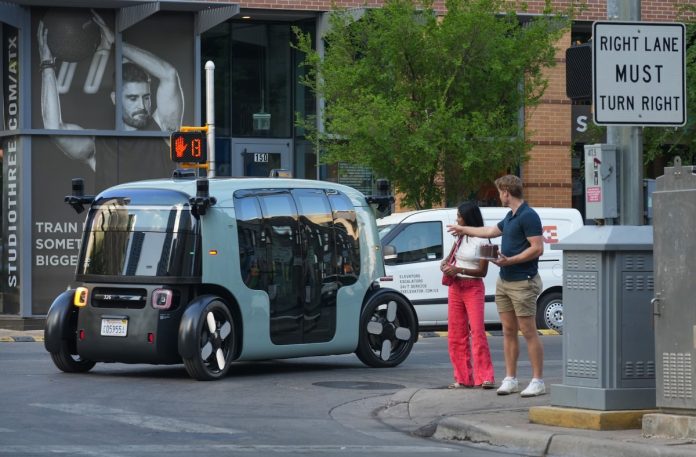
The National Highway Traffic Safety Administration made a series of autonomous vehicle technology announcements designed to cut red tape and accelerate the development and deployment of this technology (my article describes many of its actions). The one that got the most attention was the agency’s decision to give Zoox a temporary exemption from eight federal motor vehicle safety standards, which will finally allow the company to charge customers for rides in its custom-built robotaxi.
The importance of this can’t be understated. This was one of the last remaining regulatory hurdles Zoox needed to clear before launching a commercial robotaxi service. And according to the company, paid rides are imminent. The company will start charging for rides in Las Vegas first.
Details
Meanwhile, Waymo and other robotaxi operators are facing increased scrutiny over how their autonomous vehicles interact with emergency responders, a regulatory risk that’s becoming harder for the industry to shrug off. As I have noted before, San Francisco mayor Daniel Lurie asked state regulators to bolster rules for autonomous vehicles nearly two weeks after Waymo robotaxis became immobile in heavy July 4 traffic, ran out of power, and blocked key streets, further compounding the gridlock.
This week, Rep. Kevin Mullin (D-Calif.) proposed a bill that would direct federal regulators to establish minimum national safety standards for autonomous vehicle operators.
“We have seen disturbing, and frankly, an unacceptable number of incidents where autonomous vehicles inadvertently interfere with emergency responders,” Mullin said during the press conference, which Lurie also spoke at.
Analysis
So here we are, a push forward, and nope, a pull back. And in the middle is the AV industry.
What do you think? Send me an email with your view at [email protected].
Lucid has landed more Saudi money, this time from Prince Al Waleed bin Talal Al Saud, a member of the Saudi royal family. The billionaire prince purchased a little more than 19 million shares, or about 5%, of Lucid Motors, according to a regulatory filing.
Stay informed with the latest news on Wararka.so — your trusted source for Somalia and world news.