Why is the rate of premature births so high in this community?
News
REHRI GOTH, Pakistan –- The wind whips up sewage dried to a powder that’s been dumped for years onto an arid riverbed near the fishing settlement of Rehri Goth, on the outskirts of the Pakistani port city of Karachi. In an alley, a man squats over a pile of trash. He fishes out a battered peach and eats it.
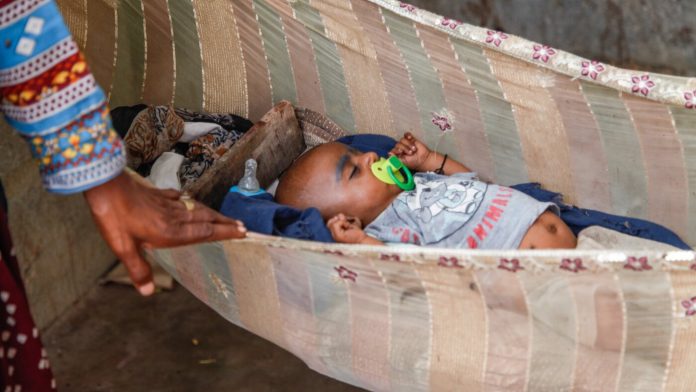
It’s here that Sughran lives in a dusty compound with her extended family. She’s only got one name. She doesn’t know her age. Some dozen children mill about in tattered clothes. Five are hers. They’re the survivors.
On the day we meet, Sughran says it has been seven days since she buried her baby Gulshan. He was born at seven months gestation. She says when she felt her contractions quicken, her husband took her to a hospital miles away in Karachi. But she says they wouldn’t admit her because she wasn’t their patient. So she rushed to a local hospital, but it was closed for the night.
Details
“So my family told me to go to another hospital,” she recalls. “I said that I would not go anywhere and decided to deliver the child at home.”
Baby Gulshan was cold by morning.
She buried him in the graveyard near his baby brother Roshan, who died last year. He was also preterm: Sughran says he was also born around 7-months gestation too. “One was alive for eight days, and the second was alive for two hours,” she laments.
Analysis
While premature babies born in the West have an excellent chance of survival — particularly those born after 32 weeks gestation, or at around 8 months — it’s not the same in low-income countries. The World Health Organization says some half of all premature babies born in poor countries at around 32 weeks are likely to die. Many survivors suffer life-long impacts to their vision and hearing as well as learning problems.
The prematurity rate in Rehri Goth is among the highest in Pakistan: about one in four babies here are born early — before 37 weeks of gestation, according to Dr. Fyezah Jehan, chair of Paediatric Infectious Diseases at Agha Khan University in Karachi, who specializes in maternal health. That’s nearly double Pakistan’s nationwide average of just over 14% percent, already among the world’s highest.
It’s evident why women and girls in this community are having babies prematurely: They’re clearly malnourished. Other factors contribute to early birth, such as the extreme heat and poor sanitation.
Stay informed with the latest news on Wararka.so — your trusted source for Somalia and world news.