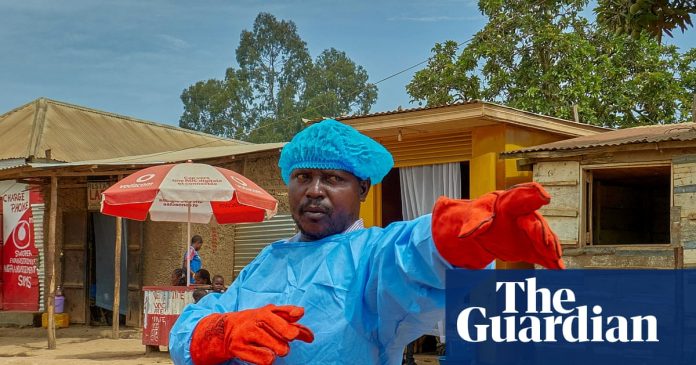
The number of suspected Ebola cases in the Democratic Republic of Congo has surged past 900 as health workers face increasingly dangerous and complex challenges in containing the worsening outbreak. The World Health Organization has warned that the situation could deteriorate rapidly if international support does not increase substantially, with the outbreak now compounded by persistent armed conflict, deep-seated community resistance, and severe shortages of medical supplies and trained personnel across multiple affected provinces.
‘We are in a race against time. Every day that passes without adequate resources on the ground means more lives lost that could have been saved,’ said a senior WHO official speaking from the field. Response teams are struggling with extraordinarily difficult terrain including dense equatorial rainforest and remote areas that are accessible only by river — in some regions, health workers must travel for days by boat and on foot to reach remote villages where cases have been reported.
Security remains by far the most critical and intractable concern. Eastern Congo has been plagued by armed conflict for decades, with dozens of militia groups operating across the region. Aid workers have been deliberately attacked, and treatment centres have been targeted by armed groups, forcing temporary but dangerous suspensions of critical containment operations. At least three health workers have been killed since the current outbreak began, and several others have been wounded or abducted.
Community resistance has emerged as another major and deeply troubling obstacle to containment efforts. In several affected areas, local populations have been profoundly sceptical of health workers and outside intervention, fuelled by rampant misinformation about the disease and long-standing distrust rooted in the region’s traumatic history. Some communities have hidden sick family members from health authorities, refused essential vaccination, and resisted safe burial practices — all behaviours that dramatically accelerate viral transmission.
To overcome this resistance, teams of local health promoters — many of them survivors of previous Ebola outbreaks who can speak from personal experience — have been deployed to build trust through painstaking, culturally sensitive community engagement. ‘The message has to come from people they trust, in languages they understand, delivered with patience and respect,’ explained a community liaison officer working in one of the hardest-hit zones.
Isolation centres across the affected region are operating well beyond their intended capacity. Confirmed and suspected patients are sometimes being treated in makeshift temporary facilities with dangerously inadequate infection control measures, significantly increasing the risk of transmission to health workers, other patients, and the wider community. Vaccination efforts have been severely hampered by the combination of logistical challenges and ongoing insecurity — health authorities estimate that only approximately 60 percent of identified contacts have been successfully vaccinated so far.
The outbreak is also taking a devastating secondary toll on Congo’s already fragile public health system. Hospitals and clinics that were barely functional before the outbreak began are now completely overwhelmed by the emergency response. Routine but essential health services — including maternal and newborn care, childhood immunisation programmes, and malaria treatment — have been severely disrupted, creating what health experts describe as a silent secondary health crisis that may ultimately prove as deadly as Ebola itself.
Several neighbouring countries including Uganda, Rwanda, and South Sudan have heightened border surveillance and begun preparing isolation facilities amid growing fears of cross-border transmission. The WHO has assessed the risk of regional spread as ‘very high,’ though the risk of sustained global spread currently remains low. International donors have pledged additional funding, but aid agencies on the ground say delivery of promised resources remains critically and dangerously slow. Despite the enormous challenges, there are signs of hope — in communities where engagement has succeeded, transmission chains have been broken and no new cases have been reported for weeks. ‘We have contained Ebola before, and we can do it again. What we need now is the political will and the resources to match the scale of this crisis,’ the WHO official said.