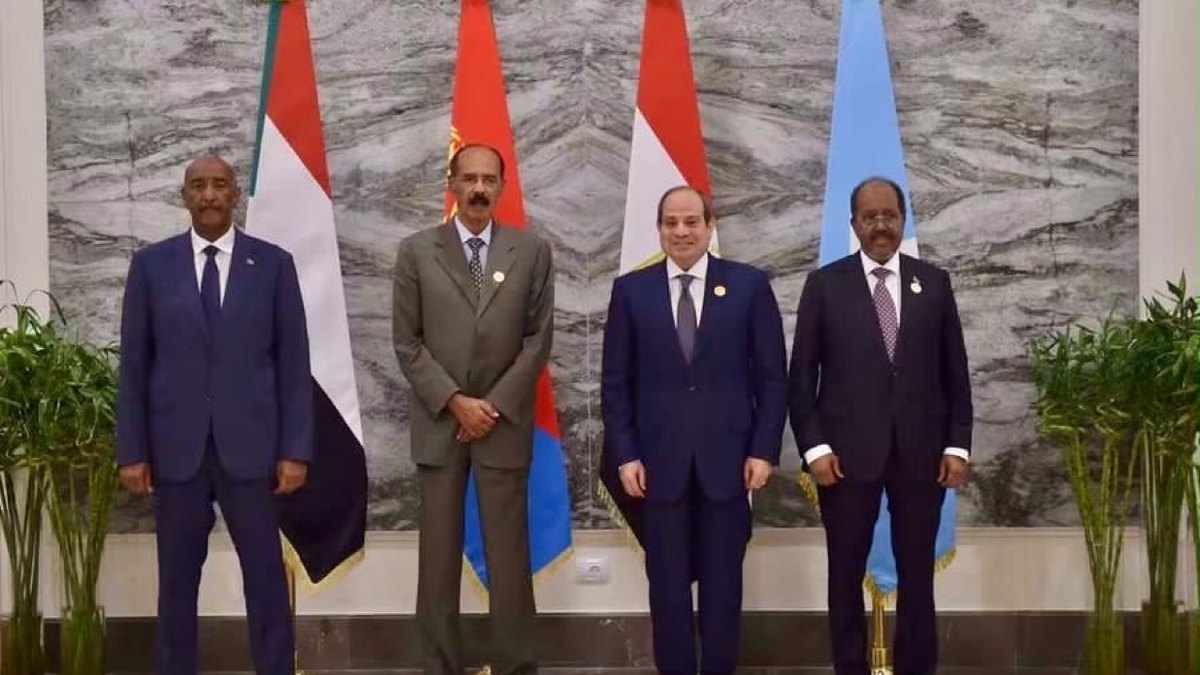

Dowladda Federaalka Itoobiya ayaa jawaab rasmi ah ka bixisay bayaankii kasoo baxay shir-madaxeedka wadatashiga afar geesoodka ah ee magaalada El Alamein, kaas oo ku saabsan arrimaha biyaha Nile iyo raadinta marin Badda Cas.
Diidmada dalalka hoose ee biyaha Nile
Madaxda Masar, Suudaan, Eritrea iyo Soomaaliya ayaa shirka ka dhacay El Alamein si weyn u adkeeyay muhiimadda ixtiraamka sharciga caalamiga ah ee nidaamiya webiyada xuduudaha ka gudba, oo uu ku jiro webiga Nile. Dalalkaas ayaa xukuumadda Addis Ababa usoo jeediyay in aanay keli ku noqon ka faa’iidaysiga biyaha Nile, gaar ahaan ka dib markii Itoobiya ay horay uga dhistay biyo xireen si ay koronto uga dhaliso.
Wasaaradda Arrimaha Dibadda Itoobiya ayaa sheegtay in ay ku socoto danaha ay ka leedahay isticmaalka biyaha webiga Nile, balse ay ogolaatay inay jirto waajibka iskaashiga ee loo marayo wargelin horudhac ah iyo wadatashi. Masar, Suudaan, Eritrea iyo Soomaaliya ayaa si buuxda u diideen tallaabo kasta oo uu qaado hal dhinac, taas oo si taban u saamaynaysa isticmaalka biyaha ee hadda ka jira labada dal ee ku yaalla qaybta hoose ee webiga Nile.
Raadinta marin Badda Cas iyo difaaca madaxbannaanida
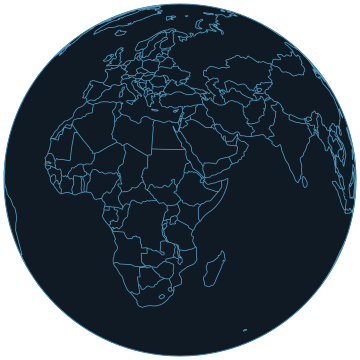
Itoobiya ayaa sheegtay inay jirto dan ku riixaysa raadinta marin ay u marto Badda Cas, waxayna ku doodday in juqraafi ahaan iyo taariikh ahaan xiriir dhow la leedahay baddeeda. Xadka Itoobiya ayaa lagu sheegay inuu qiyaastii 30 mayl u jiro xeebta Badda Cas, iyadoo wasaaraddu ay sheegtay inay doorbidayso wada-hadal iyo is-ixtiraam, balse aanay ka gorgortami doonnin ilaalinta madax bannaanideeda iyo dhulkeeda.
Wasaaradda Arrimaha Dibadda Itoobiya ayaa intaas ku dartay inay difaacayso madaxbannaanideeda iyo danaha qarankeeda, ayna diyaar u tahay is difaacis ay ku samayso arrimaheeda gudaha iyo danaheeda gaarka ah. Arrimaha biyaha iyo Badda Cas ayaa lagu saleeyay xaqiiqooyinka juqraafiyeed iyo taariikheed, iyadoo Itoobiya ay sheegtay inay difaacayso xaqiiqooyinkaas.
The Federal Government of Ethiopia has released an official response to the declaration issued by the four-nation summit held in El Alamein, involving Egypt, Sudan, Eritrea, and Somalia. The summit leaders emphasized the importance of international law governing transboundary rivers, including the Nile, while urging Ethiopia not to act unilaterally regarding the Grand Ethiopian Renaissance Dam.
Ethiopia Asserts Sovereign Interests
In its response, the Ethiopian Foreign Ministry stated that the country's interest in utilizing the waters of the Nile River remains a priority. The government also highlighted a strategic interest in seeking access to the Red Sea, arguing that Ethiopia has both geographical and historical ties to the region. According to the ministry, Ethiopia's border is approximately 30 miles from the Red Sea coast.
Ethiopia further declared that it will not compromise on the defense of its sovereignty and territory. The Foreign Ministry expressed readiness to defend its internal affairs and specific national interests, stating that decisions regarding the Nile and Red Sea should be based on geographical and historical facts.
Regional Tensions Over Water Rights
The summit declaration noted that the leaders of Egypt, Sudan, Eritrea, and Somalia strongly underscored the necessity of respecting international law regulating rivers that cross borders. They specifically called for the principle of causing no harm and the obligation of consultation, warning, warning, and agreement.
The four nations collectively urged the Addis Ababa government not to act alone in benefiting from the Nile waters, particularly concerning the hydropower dam previously constructed. They argued that any unilateral action by one party would negatively impact the current water usage in the two countries located downstream on the Nile.
Ilaha iyo xuquuqda sawirka
Sawir: Caasimada Xigasho